


Today CASPR is launching our new program on online gambling policy, called Life Savings. We are releasing:
50 State Rankings and Report Cards: Check your state’s score.
Online Gambling Tax Rates for Each State: Ranging from 6% to 51%.
Model Legislation for States: Policies to prevent new gambling addictions and bankruptcies.
In the past 8 years, dozens of states have legalized online gambling after intense lobbying from gambling companies. Without policies in place to prevent addiction and bankruptcy, the result has been terrible for their citizens. The only fig leaf of protection in most states are industry promoted post-addiction policies, like gambling hotlines or counseling. These are perfect tools for helping people after they’ve already lost everything to the gambling companies, but any real protections obviously need to happen before.
Predictably, states that have legalized gambling have seen a surge in gambling addiction: 24/7 gambling in your pocket is nothing like casual bets on a game with your friends. Even compared to casinos, which actually create jobs and economic activity inside a state, online gambling is a money vacuum, pulling dollars out of the state. This reduces economic activity and resulting tax generation within the state.
Best and Worst States
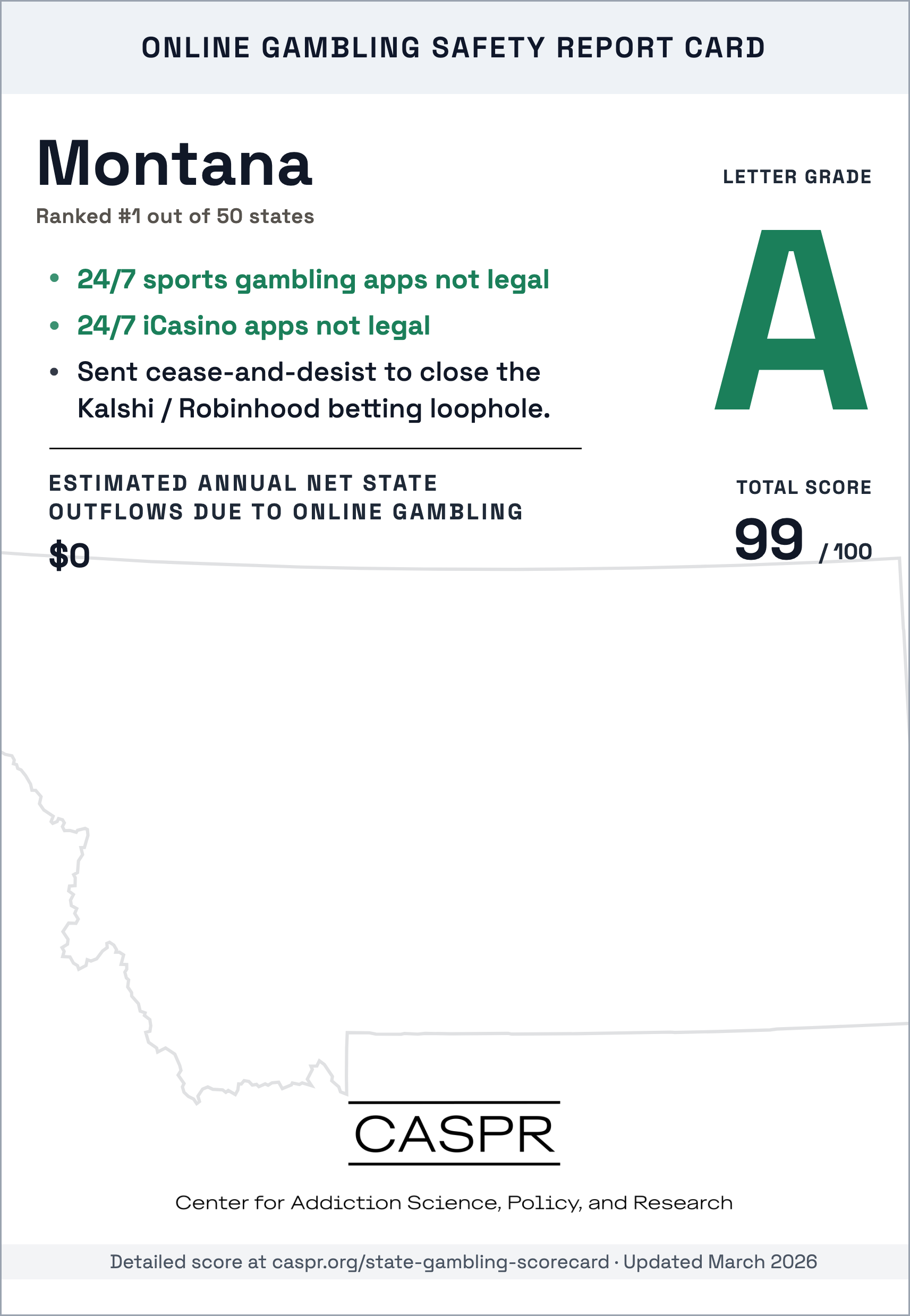
The top state in our rankings is Montana: online gambling is not legal and the state has sent a cease and desist to Kalshi to try to stop their illegal national sports betting ‘prediction app’, which ignores state law and pays no taxes to the states.
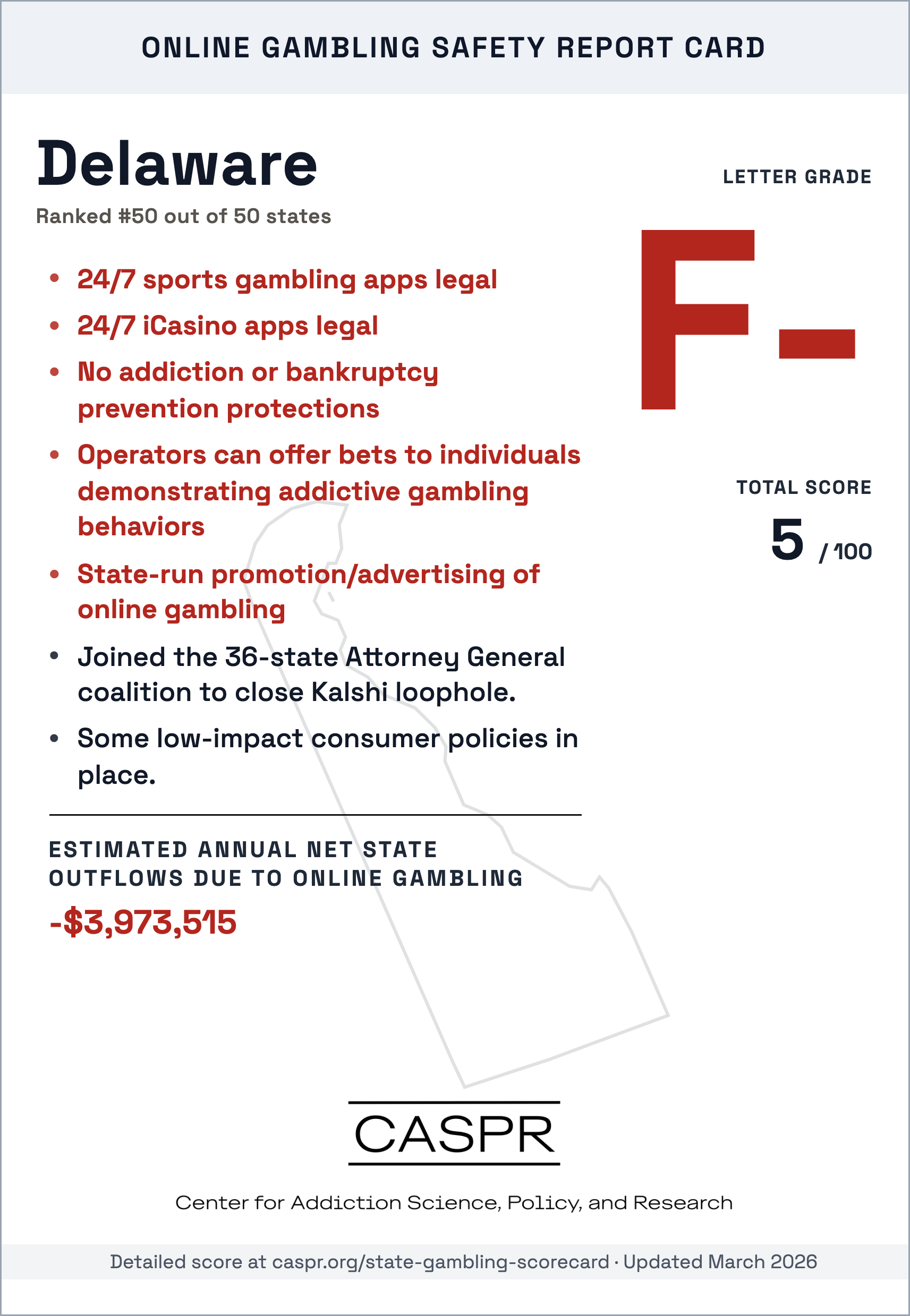
The lowest ranking state is Delaware, which earns an F-minus, a grade so low that school children still debate whether it even exists. Turns out it does! Delaware allows sports betting apps, allows even more addictive iCasino apps, has no anti-addiction protections for its citizens, and the state itself promotes gambling to its own citizens. A total disaster.
See the full list of 50 states here, including the full calculation of the scores, tax rates, and more.
What could states be doing better?
Policies that would prevent new gambling addictions and reduce bankruptcies include:
Loss Limits: if someone loses more than $500 in a month, require users to take a 3 month pause to interrupt the addictive cycle
Prohibit In-Game Microbets
Block App-store gambling ads and app listings to minors.
Require Spousal Consent for Joint Accounts
Like alcohol, make it illegal to continue to serve bets to individuals demonstrative addictive gambling behaviors (loss chasing, escalating deposits).
Waiting periods on deposits
Raising the age limit to 25, closer to the age at which executive function is fully developed in men
In short, if online gambling is intended to be fun and entertaining, citizens should be protected against catastrophic losses. It should be illegal for online gambling companies to drain a family’s life savings in a matter of weeks, just because their app has successfully A/B tested its way to a hyper-addictive design.
All of these policies and more are in our resource of Model Legislation for State Regulation of Online Gambling.
Great article CASPR! I do disagree on one point in the 50 States. Oregon should have easily been found to be a F- versus an F. Oregon easily beats Delaware as the most corrupt Lottery and is much bigger too.